
Here is a complaint you have definitely seen in an anime comment section: "Just tell her already. It's been forty episodes."
It's a fair reaction, and it's completely wrong — because it assumes a romance can drift into existence the way it does in most Western stories. In Japan, it can't. Somebody has to stand there and say the words, and until they do, nothing has technically happened.
That act is called 告白 (kokuhaku), literally "confession," and it is not a mood or a vibe. It is a formal, answerable proposal with a standard script, a standard answer, and a standard set of places to perform it. Once you can see it, an entire layer of anime romance snaps into focus — including four rituals that look like whimsical set dressing to overseas viewers and are actually load-bearing structure: the shoe-locker love letter, Valentine's chocolate, White Day, and the second button.
The line that starts everything

The confession has a script, and the script is short: tsukiatte kudasai — "please go out with me." What follows is a yes or a no, delivered on the spot.
That's the whole thing. And it means Japanese dating has a start line. Before the confession you are not together; after it, you are, unambiguously, and both of you know exactly which day it began.
Western romance has no equivalent moment. You hang out, then you're seeing each other, then at some undefined point you're together — a slow fade with no single frame you could point at. There is no line to say and no answer to wait for.
This is why so much anime romance reads as maddening to a Western audience and as unbearably tense to a Japanese one. It isn't that the characters are too shy to act. It's that the act is a single, terrifying, irreversible speech, and either the relationship exists or it doesn't.
Kaguya-sama: Love is War is the purest demonstration ever made: an entire comedy franchise built on the premise that confessing first means losing, which is only funny if the confession is a formal move in a game with rules. Toradora!, Horimiya, Kimi ni Todoke and Skip and Loafer all run on the same engine.
And Tsukigakirei may be the most quietly radical of the lot: two middle schoolers who confess early, then spend the series discovering that the confession was the easy part.
Why the scene always happens in the same handful of places

Behind the gym. Under a cherry tree. On the roof. In an empty classroom after everyone's gone. Called out by a note that just says "meet me here."
Overseas viewers read this as anime being repetitive. It's the opposite — a formal act needs a venue. A confession requires somewhere private, somewhere after hours, and somewhere the other person has to deliberately travel to, which is why the summons-note is half the drama. The walk to the location is the suspense.
(The rooftop, incidentally, is mostly fiction. Real Japanese school roofs are usually locked. It survives in anime because it's a perfect confession stage: high, empty, and impossible to leave quickly.)
The shoe locker is a postal system
Every Japanese school has a 下駄箱 (getabako) — a wall of shoe lockers at the entrance where students swap street shoes for indoor ones, coming in and going out, every single day.
Stop and consider what that actually is. It is a small, personal, addressable box, assigned to one named student, which that student is guaranteed to open twice a day, in a semi-public space anyone can reach before class. It is a school-internal mail network that nobody designed as one.
That's why the love letter in the shoe locker is a genre fixture rather than a quirk. It is the only reliable delivery infrastructure a Japanese teenager has for a message they cannot say out loud — anonymous if you want, deniable if it goes wrong, and certain to be received. Western schools have hallway lockers, but they aren't universal, aren't opened on a schedule, and mostly have combination locks.
Being honest: actual shoe-locker love letters are increasingly rare, killed by the same phone in everyone's pocket that killed a lot of things. Anime keeps them because they're a better scene than a text message — though Tsukigakirei gets real mileage out of the modern version, where the agony is watching a chat message sit unread.
Valentine's Day: a national romance ritual invented by candy companies

This is the one that genuinely startles people, and it's worth getting the details right, because the details are absurd.
In Japan, on February 14th, women give chocolate to men. Not mutual gift exchange — a one-directional flow, inverted from the Western version. Overseas fans usually assume this is some deep-rooted tradition. It is a marketing campaign that got out of hand.
The usual first data point is a 1936 Morozoff advertisement in Kobe, which was aimed at foreign residents and went essentially nowhere with the Japanese public. The real ignition came in 1958, when Mary Chocolate ran the first Valentine sale in a Tokyo department store. Over three days it sold three 50-yen chocolate bars and one 20-yen message card. Total revenue: 170 yen.
The following year they introduced heart-shaped chocolate and, crucially, the sales pitch that women should be the ones giving. Through the 1960s, Morinaga and the rest of the confectionery industry poured advertising into it, and by the 1970s "Valentine's equals chocolate, given by women" was simply a fact of Japanese life.
An entire nation's romantic calendar, traceable to a three-day promotion that made 170 yen.
It then subdivided, because Japan subdivides things:
- 本命チョコ (honmei choco) — the real one, for the person you actually like
- 義理チョコ (giri choco) — obligation chocolate, for coworkers, classmates, your boss
- 友チョコ (tomo choco) — for friends, girl-to-girl
- 自分チョコ (jibun choco) — the good stuff, for yourself
And here is why it matters to storytelling: handing over honmei choco is a confession. February 14th gives you a socially sanctioned excuse to approach someone, and a socially legible object to do it with. It converts an impossible speech into a delivery. That's a gift to any romance writer — a scheduled, calendar-enforced crisis point.
The disambiguation problem is a whole comedic subgenre in itself. Is this honmei or giri? He'll assume giri. She'll never clarify. Roll credits.
White Day, March 14th, closes the loop — men return a gift a month later — and it is even more nakedly commercial. Fujiya ran a "return Valentine" marshmallow campaign in 1973; the National Candy Industry Cooperative Association formally established White Day in 1978 and launched it with a large campaign in 1980. There is no ancient tradition here at all. There is a trade association.
For a story, though, the effect is elegant: the confession now has a thirty-day reply window, and the audience gets to spend a month watching someone wait.
The second button
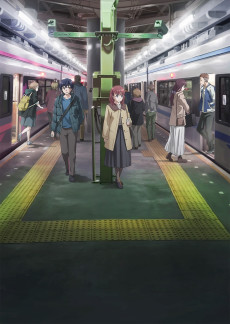
Graduation day. A boy in a 学ラン, the black stand-collar uniform. A girl walks up and asks for his second button.
Overseas viewers watch this scene with no idea what's happening. Why the second one? Why a button?
Nobody is entirely certain, and there are competing accounts. The most-repeated explanation is positional: the second button sits closest to the heart. A widely told origin story places it in the war — students conscripted straight out of school, leaving in their uniforms, handing a button to someone as a piece of themselves to keep. The custom is often credited with reaching the general public through a 1960 film in which a cadet tears off his second button before deployment, and it became broadly fashionable again in the 1980s, when hit songs about school uniforms and graduation put it in front of everyone.
Whatever the true origin, look at what it does structurally. It is a confession you can make without saying anything, on the exact day the clock runs out.
Because it does run out. The Japanese school year ends in March, and graduation genuinely disperses people — different universities, different cities, no shared building to run into each other in ever again. Asking for the button is a last-second, wordless, physically irreversible move: you take something off his body and keep it.
Just Because! is essentially a whole series about this deadline — a group of third-years in the dead zone between entrance exams and graduation, running out of days to say anything.
The real pattern: Japanese school romance runs on deadlines
Step back and the four rituals turn out to be the same device.
The confession needs an occasion — a formal act can't happen at a random Tuesday lunch. So the school calendar supplies them, one after another: the culture festival, the last night of the school trip, February 14th, March 14th, the final match, graduation day.
If you read our piece on why one lost match ends a Japanese teenager's entire career, this will look familiar. Bukatsu is organized by tournaments that end things. School romance is organized by dates that end things. Same shape, different content: a fixed, visible, external clock that forces a moment.
Western school stories don't have this. There's prom, and that's about it. Japanese school stories have a calendar full of doors closing, and every one of them is a reason someone finally has to speak.
Whisper of the Heart: the confession that arrives before anyone speaks
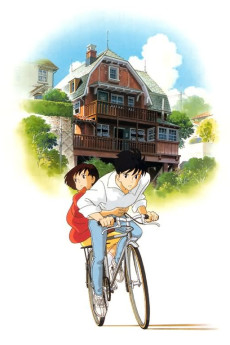
If you want a single film that understands all of this, it's Whisper of the Heart (1995) — and it gets there by using a piece of Japanese school infrastructure even more obsolete than the shoe locker.
Shizuku reads constantly, and every library book she borrows has a card tucked in the back where borrowers wrote their names by hand. She starts noticing that one name keeps appearing before hers, over and over, across exactly the books she loves. She falls for a boy through a paper trail — a courtship conducted entirely in the school and neighborhood library's checkout records, before the two of them exchange a single word.
It's the shoe-locker principle taken to its most beautiful conclusion: a message system nobody built for messages, carrying a confession nobody wrote.
And when the film finally reaches its actual confession, it refuses the standard script. It isn't "please go out with me." It's a question about the shape of the rest of their lives, asked by two teenagers who have no business asking it and mean it anyway.
The library card system is gone now, replaced by barcodes and databases decades ago. Which quietly makes Whisper of the Heart a record of a mechanism that no longer exists — a love story that could not be told the same way today.
Where to see each of these
- The confession as formal move — Kaguya-sama: Love is War, Toradora!, Kimi ni Todoke
- The confession as a beginning, not an ending — Tsukigakirei, Skip and Loafer, Horimiya
- Valentine's and the honmei/giri problem — Lovely Complex, Say "I love you", The Dangers in My Heart
- The graduation deadline — Just Because!, Ocean Waves, 5 Centimeters per Second
- Confession without a shared language at all — A Sign of Affection, and of course Whisper of the Heart
Why the rulebook makes better love stories
A romance culture without a start line can afford to be vague. A romance culture with one cannot. Somebody has to choose a day, choose a place, walk there, and say a sentence that can be answered with a single word — and then live with the answer.
That's an enormous amount of dramatic pressure to build into ordinary life, and Japanese school stories have spent decades mining it. The next time a character spends forty episodes not confessing, they aren't stalling. They're standing at the edge of the only irreversible thing a teenager is allowed to do.
More culture explainers on AnimeBuzz: the bukatsu tournament system, the senpai-kohai hierarchy, and what women are actually cosplaying in 2026. Or browse the data: all-time rankings, by genre, by tag.
Sources and notes
- 日本のバレンタインデー(日本チョコレート・ココア協会) and メリーチョコレート ブランドストーリー — the 1958 sale and the "women give" pitch
- 「モロゾフ」説と「メリー」説を検証(文春オンライン) — competing origin accounts, including the 1936 Kobe advertisement
- ホワイトデー (Wikipedia) — Fujiya 1973, the 1978 establishment by the candy industry association, and the 1980 campaign
- 卒業式に学生服の第二ボタンを贈るのはなぜ?(カンコー学生服) and 悲恋 卒業式「第二ボタンください」の起源とは(京都新聞) — the competing second-button origin stories
Origin accounts for the second button are folklore as much as history; we've presented the main competing versions rather than picking one.